
Many studies show that the way a student feels plays is a huge part in how well they learn. When a person is stressed, their brain basically shuts down and cannot take in new information. By starting a therapy dog program, our school can create a much better place for everyone. It can help kids want to come to school more often, keep the halls calmer, and even help students get better grades.
The science behind this is actually very simple. When you spend just 5 to 20 minutes with a friendly dog, your body’s stress levels drop. Scientists measure this by looking at cortisol, which is the chemical in your body that makes you feel “frazzled” or upset. When a dog is around, cortisol goes down, and students feel a lot more relaxed.
When a student is relaxed, they can think clearly. This is especially helpful for subjects like reading. A study from the University of California, Davis found that students who read out loud to a dog improved their reading skills by 12% to 30%. This is because a dog is a “non-judgmental listener.” The dog doesn’t care if you trip over a big word or read slowly. This makes students feel brave enough to keep practicing without feeling embarrassed.
Therapy dogs are also great for helping with behavior. Many schools say that there are fewer fights or arguments when a dog is on campus. If a student is having a really bad day or a “meltdown,” a dog can help them calm down much faster than a long talk in the principal’s office. The dog acts as a “reset button” for their emotions.
Some people might worry that a dog would be a distraction, but it is actually the opposite. Being around a dog can stimulate the brain and give it a little break. Students can even bring their books or worksheets to do while sitting with the dog. This helps them stay focused because they feel happy and safe while they work.
Of course, bringing an animal into a school takes some planning. There are a few things people usually worry about, but there are easy ways to fix them:
Allergies and Safety: Therapy dogs are not just random pets; they are trained to be very calm and clean. To keep everyone safe, the school can have “dog-free zones” for students who have allergies.
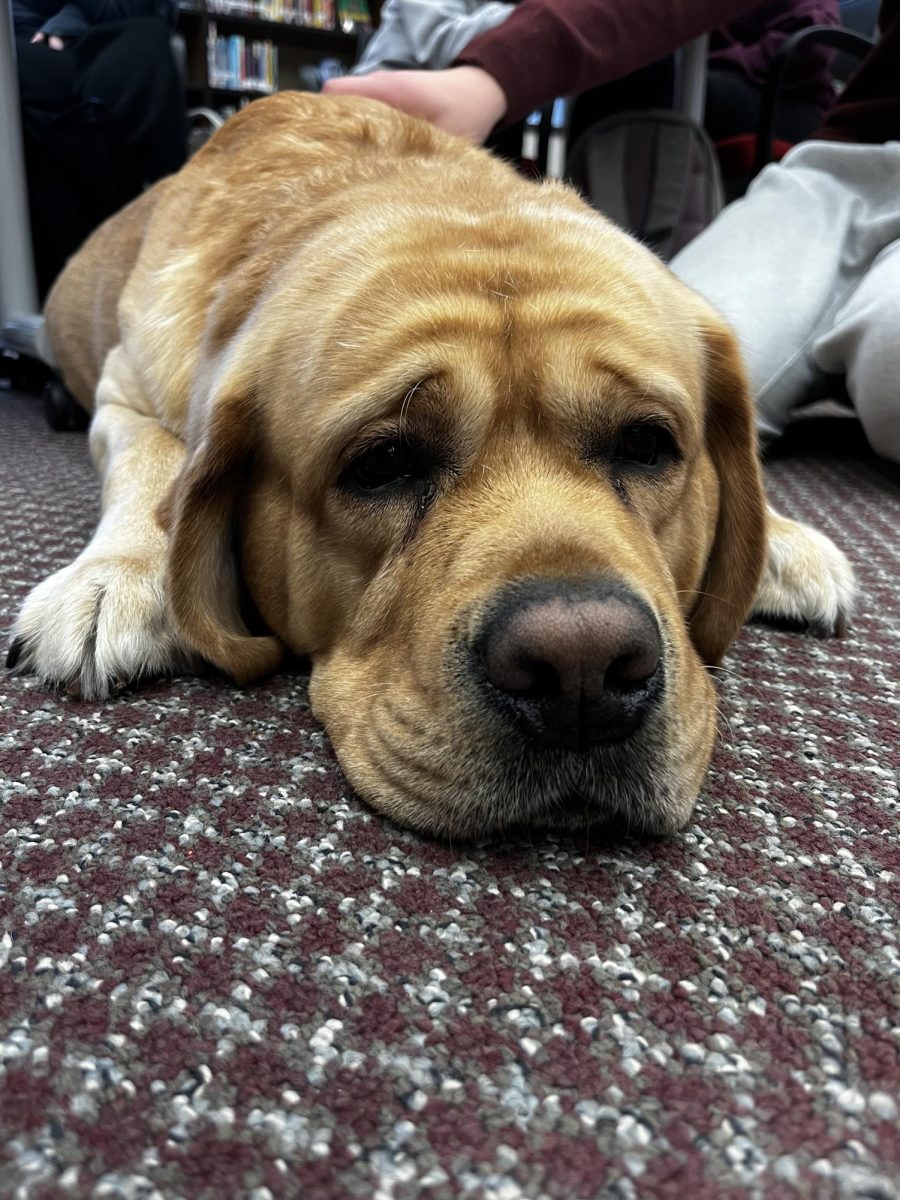
Sharing the Dog: It might seem hard to share one dog with hundreds of students, from freshmen to seniors. However, the school can make a schedule. The dog can visit different classrooms or stay in a specific spot, like the library, where anyone can come by for a few minutes to say hi.
Hygiene: Because these are professional therapy dogs, they are kept very clean and brushed, which helps keep the school tidy.
Adding a therapy dog to our school is a simple but powerful way to help students succeed. By lowering stress and providing a safe, comfortable space, we give everyone a better chance to focus on their goals. While there are logistics like allergies and schedules to manage, a clear plan can make the program work for everyone. Ultimately, a therapy dog helps turn our school into a place where students feel happy, calm, and ready to learn.