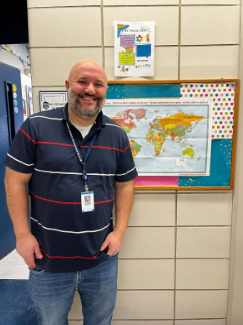


I think that traditional high school doesn’t always offer opportunities for students who are interested in the trades and vocational work, so some students don’t see the value in attending and/or finishing. A student who is considering dropping out may not have strong connections with others in the school and may not feel like they can get the help they need. I think there are also other reasons that people may drop out, maybe they need to work to help their family or maybe they have physical or mental health issues they are dealing with. Said Triton staff member Mrs. Wagner
Ex-Triton student, Anthony Russo, had dropped out of school for work, he says. “ School has always been super hard for me, and I struggle with sleep so getting up is another issue for me that I’ve been wanting to fix, but I figured if I got it approved to leave school and try and go into the work force I would do that, and so far it’s been great for me, and honestly it’s helped my sleep schedule.
Our most recent dropout, Jon Oneil, was asked, why did you drop out, and are you planning to do online, and/or come back for senior year to graduate? “ I struggle with a bit of personal stuff, and it makes it hard for me to do some things, and it wasn’t me dropping out. I’m coming back for the fourth quarter, but I honestly felt like I really just needed a break; that may sound out of the ordinary, but a break is really what I needed.
It always makes me sad when this happens, and I wish they had asked for more help,” said Wagner. ” I think it’s very important to finish high school- even if it’s only to prove to themselves and future employers that they can do it. High school offers growth outside of just academics, and I think being part of a community is important to our development as adults. Even if people choose not to go to college, learning how to learn is important to our future success in everything we do.”
According to the Massachusetts Department of Elementary and Secondary Education (DESE), Triton generally maintains a lower dropout rate than the state average, but certain “high needs” groups face more significant challenges.
According to the DESE’s “Triton Regional High School Snapshot,” For the most recent full reporting year (2023-2024), Triton’s numbers were: Total Dropouts: 7 students (out of 566 enrolled). Annual Dropout Rate: 1.2%. Grade Breakdown: The highest risk year at Triton was 12th grade (2.2%), followed by 10th grade (1.4%). Students identified as “High Needs” (including those with disabilities or from low-income families) had a higher dropout rate of 3.1%.
If I could say something to students who are thinking of dropping out, I would say that they shouldn’t close a door or eliminate future choices. It’s great to have choices in life. They may not know what they want to do in the future, and they may find they need a high school diploma for what they want to do. I am sure they will never regret graduating and won’t say, “I wish I had never graduated high school,” but they may regret it if they don’t. Said Wags
Massachusetts recently released its 2025 data, showing a slight improvement in keeping kids in school: Statewide Dropout Rate: Approximately 1.9% – 2.0%. Urban vs. Suburban, Large urban districts like Boston saw a drop to 3.6% in 2025 (a record low for them), showing that even in high-pressure areas, retention is improving. The “Grade 9” Wall, Statewide, 9th grade remains a critical “make or break” year. Students who fail even one core course in 9th grade are statistically much more likely to drop out later.
We asked Ex-Triton student Michael Jolivet, since you were the first one to drop out, do you think dropping out for the time that you have, has had an impact on others doing it too? “ I feel like it kinda had something to do with my other friends dropping out, but at the same time, their families need to approve of it too, so that’s a whole other thing, so maybe a little.
The “Contagion” Effect
Michael mentioned his friends might have followed his lead. Research calls this peer influence. When a “first” student drops out, it can normalize the idea for others who are already struggling, making the “unthinkable” choice seem like a viable exit strategy.
The “Work-First” Reality
Anthony found success in the workforce and a better sleep schedule.For many MA students, the immediate “win” of a paycheck outweighs the “long-term” promise of a diploma, especially if they feel the school curriculum doesn’t translate to real-world skills.
Academic Disengagement: Feeling that “school isn’t for me” or failing the MCAS.Family/Mental Health: As Mrs. Wagner noted, many students are dealing with “adult” problems (supporting family, health issues) while trying to be “full-time” students. In Massachusetts, workers with a high school diploma earn roughly $10,000 more per year than those without one, largely because the diploma acts as a “signal” to employers that a person can make a long-term commitment.