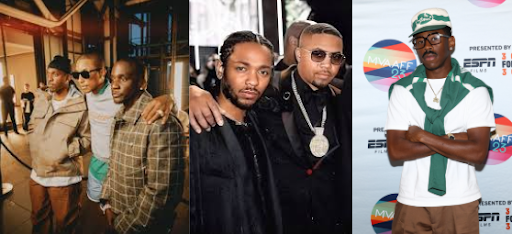

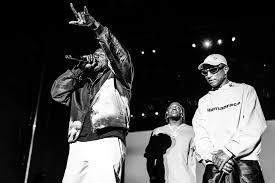
In an album that tells a tale of two brothers whose lyrics clash against one another like swords, the brotherly duo of the late rappers, Pusha-T and Malice, have come together as one and collaborated on “Let God Sort Em Out,” under their old rap duo name “Clipse”. Recently, that clash earned the brothers a Grammy nomination for “Album Of The Year.”
Pusha-T and Malice have been making music together since 1999, with their first album being “Exclusive Audio Footage”. Together until about 2010, they went their separate ways and worked on their own lives. Pusha-T took a more musical approach, while Malice took time to find himself and be with his family. It wasn’t until July of 2025 that the two finally got back together after 15 years and created one of, if not the best, albums of the year.
The first song of the Album “The Birds Don’t Sing” sets the bar high for the remaining 12 songs on the album. The song tells the story of Clipse’s parents and their last days of life. Pusha T starts the song by telling a story of the last conversation he had with his mother before she passed. The first two lines, “Lost in emotion, mama’s youngest, Tryna navigate life without my compass,” hit listeners like a truck when it is realized that the compass Pusha is missing is his own mother. T incorporates personification into his lyricism to convey deeper meanings hidden behind the rhymes. The verse continues, and Pusha explains that while focusing on his music career and popularity, he didn’t realize that while talking to his mother, she was actually against his mindset. “Tellin’ you my plans but I was leavin’ you that day, It was in God’s hands, Ye was at Elon’s waiting to get with me, On my way to Texas, that’s when Virginia hit me, And I realized in that instant, Our last conversation, you was against it, Told you I was going to Turks for Thanksgiving, I heard what I wanted to hear but didn’t listen.” Pusha realizes what his mother was trying to say to him, but it was too late. His mother was against his lifestyle, but Pusha T was too focused on getting money. As Pusha’s verse comes to a close, he reveals that while he was traveling, his mother sadly passed away just a few days after their final conversation. The cause of their mother’s death was not specified by the duo.
The next verse starts with Malice, and he explains his father’s death. One day, when Malice came to visit his father, he knew something was wrong just by the way he knocked. “By the third knock, a chill ran through my bones. The way you missed Mama, I guess I should’ve known, Chivalry ain’t dead, you ain’t let her go alone, Found you in the kitchen, scriptures in the den, Half-written texts that you never got to send.” Malice raps that his father died after his mother, this is explained from the “you ain’t let her go alone” line and his place of death was in his kitchen, and had numerous unsent texts on his phone. The cause of their father’s death was never released by Clipse’s family; however, he passed only 4 months after their mother. Malice then goes on to explain the lessons his dad taught him through memories. “”Boy, you owe it to the world, let your mess become your message”. Shared you with my friends, the Pops they never had, You lived for our fishin’ trips, damn, I had a dad. Mine taught discipline, mine taught structure, Mine didn’t mind when he had to pull a double, Mine worked overtime, smiled through the struggle, ‘Cause mine wouldn’t let us feel what he had to suffer.” Malice explains reasons why he looked up to his father and how his father was well known among other children since they never had fathers, unlike him. In a way, the local children viewed Malice’s father as theirs as well, since he was the only father who bothered to stick around. Malice points out that his father never complained about his situation because he was always ready to work and face his struggles head on unlike the other children’s father, who had left their children and never decided to face the possible struggles of fatherhood.
After this verse, the song wraps up with an empowering message about grief, remorse, and dealing with purpose after a loss. This message is hidden behind Clipse’s use of metaphors and personification, tools that writers would usually pursue in a poem. The song is comparable to a poem written by two children in an English class who are trying to surprise their parents with a gift from school, or a poem you would hear from somebody at a celebration of life. Secondly, the heartfelt lyrics are perfectly mixed by a beautiful melody from Phrahell Williams. The piano in the background could be compared to Kanye West’s song “Runaway,” which features Pusha T and has a similar message, like remorse, regret, and relationship issues. All of these elements create a perfect start to a Grammy-nominated album.