
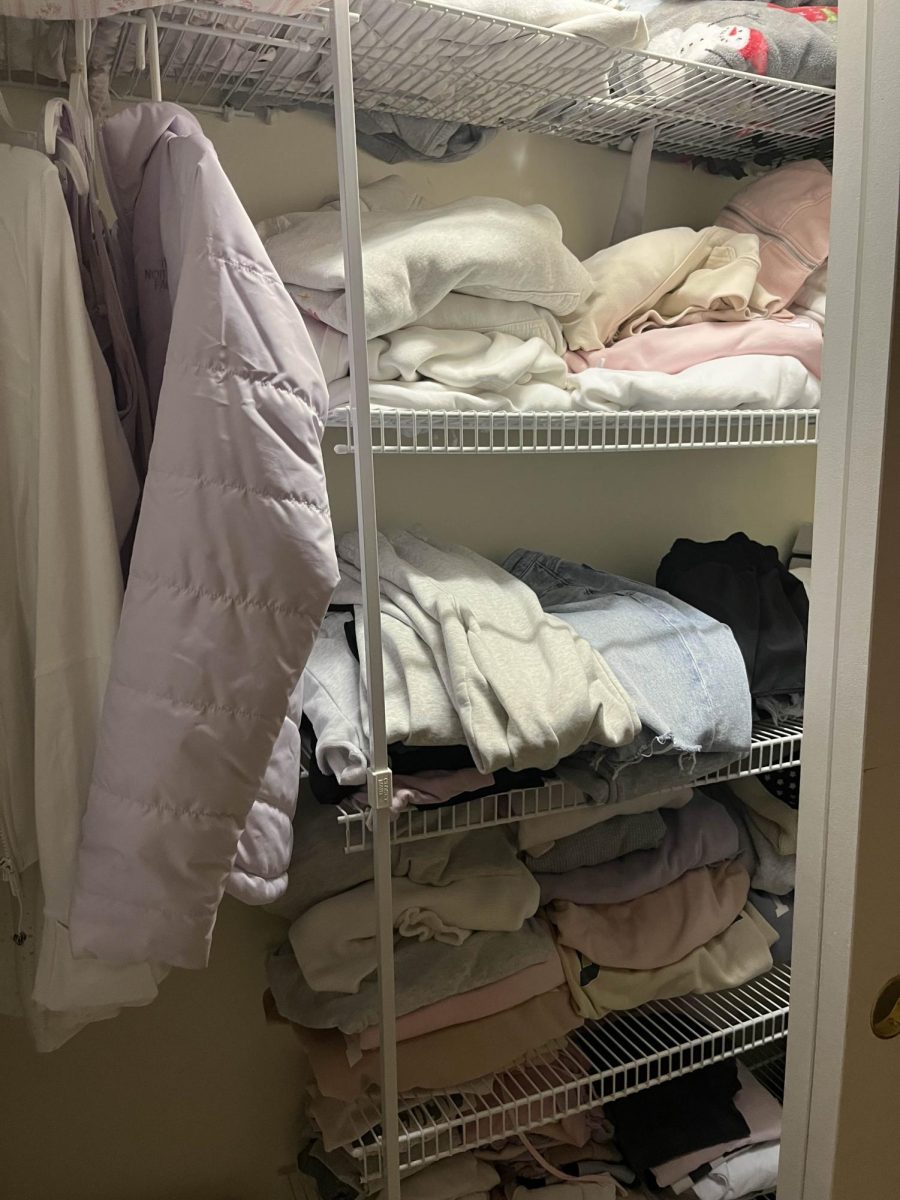
Several Triton High School students say they can relate to the constant need of overconsuming. “I buy things I don’t necessarily need,” says Senior London Cole. “I go out for food a lot.”
Overconsumption, the act of buying or using more resources and goods than are necessary, has become more prominent as more and more impractical products have been produced and sold. It’s common amongst the younger generation due to online trends, such as specific clothing brands and collectables. As influencers advertise these products, young teens feel inclined to splurge on them, hoping it’ll bring the happiness that is advertised.
According to Psychology Today “Why Do We Buy Things We Don’t Need?” people feel the need to buy things they don’t need because, “we are, perhaps more than anything else, consumers, making it sensible that we look to the marketplace to find fulfillment and happiness. Having more stuff costs more money, as does having more expensive stuff, creating the sense that there is always something else and/or better to buy.”
“I buy things I don’t need all the time,” confesses Junior London Stanley. “I buy popular stuff I see on TikTok like clothes, makeup, and hair products.”
“I’m always getting energy drinks like Bloom and Celicius,” says Junior Riley Dinsmore. “I have to try every new drink.”.
Production of impractical products uses up lots of finite resources the Earth offers, which are more crucial for necessities. Since these trends die out so fast, these products are thrown away, ending up in landfills, or donated to third world countries, just to end up causing pollution. The average person can help solve these issues that come with overconsumption by focusing on mindful purchasing and reducing their waste.
“Overconsumption is a problem,” says former Financial Literacy teacher Mr. Max Girouard. “People are replacing things so quickly when they don’t really need to replace them, people buy a shirt, wear it a couple times, then decide ‘I don’t like this shirt,’ It just keeps cycling,” he says. “You could be more financially responsible by buying things that are thrifted or a little used already, that way you’re not adding on to what you already have,” Girouard recommends.
Ultimately, the underlying solution starts with what little decisions we make day to day..