

When a teacher is reduced, it affects other staff, students, and the quality of education. However, as members of the community, we should be reminded how decisions like this are made. Why are teachers cut, and who gets a say about that?
According to the Massachusetts State Law, if a teacher has professional status (has worked at the school for more than three years) and is going to be laid off, they must be notified by June 15. If budget cuts occur after June 15, there is a five-day period during which the school must notify the teacher in writing. The law also states that teachers’ salaries cannot be an official reason for cutting them. Teachers’ being laid off can meet with the superintendent to discuss the decision. The teachers’ association is also allowed to review the decision to cut the following teachers and must state whether it agrees or disagrees with the school.
Principal Patrick Kelly said there are alternative options that the district considers before eliminating teaching positions.
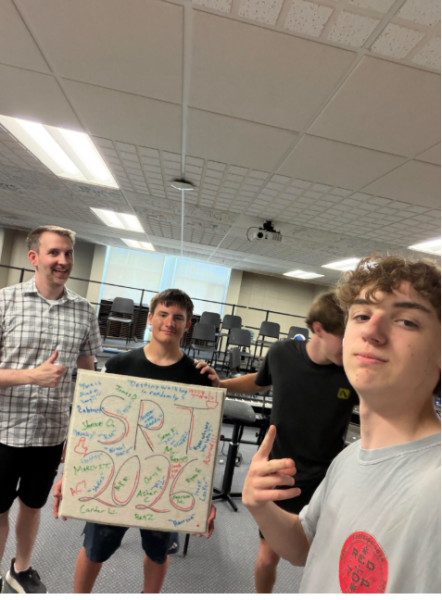
“We often look at all possible funding solutions to make sure there are not unnecessary things in the budget as well,” said Kelley. “However, the biggest cost included in the budget is employee salaries and benefits (health insurance). When there is a million-dollar gap in the budget, the only real way to make up that distance is to adjust the staffing levels.”
Examples of these budget situations are widespread, with Triton cutting more than 35 teaching positions for next school year. Teachers have also been cut over the past several years.
Back in the 2023-2024 year, there were more than half a dozen teaching positions cut.
One teacher was Ms. Alexis Cournoyer, a well-liked teacher in Triton’s English Department, who was cut due to budget reductions. She was known for her kindness and the positive environment she created for her classes.
Triton Class of 2025 graduate Cam Neary said that losing such teachers affects the school.
“Ms Cournoyer’s class was everything a senior wants right before they’re out the door,” said Neary said, remembering his time in the class as “a comfortable classroom environment” where students “read books that were intellectually stimulating.”
“I understand if Triton genuinely did not have the money to keep her position, but I am a firm believer that you need to provide this opportunity to middle-of-the-pack students, regardless of who the teacher may be,” said Neary. “Ms Cournoyer was a happy medium between AP Lit and academic probation, and Triton was a better place for it.”
Mr. Craig Kemp, who has worked at Triton as one of its music teachers for almost three years, officially resigned his position this year and won’t be back next school year. Kemp has devoted a lot of time to making sure the students enjoy and learn from his classes as much as possible.
After asking who he should think should get a say about a teacher remaining in the job, Kemp said, “the only thing I can do is ask questions. Should students get a say in who teaches them? Maybe the parents or the school board get a say?”
Kemp will be missed by his students since he isn’t just known for his teaching; he’s also known as a person whom students can go to for advice or just to talk to if they need a friend.
When asked about his opinion on his time in Kemp’s class, Junior Shane Olson said, “Mr Kemp isn’t just a teacher, he’s a friend that students go to for life advice.”
Kemp and many of his students have worked hard to keep classes such as Sound Recording Tech, Choir, and AP music theory afloat.
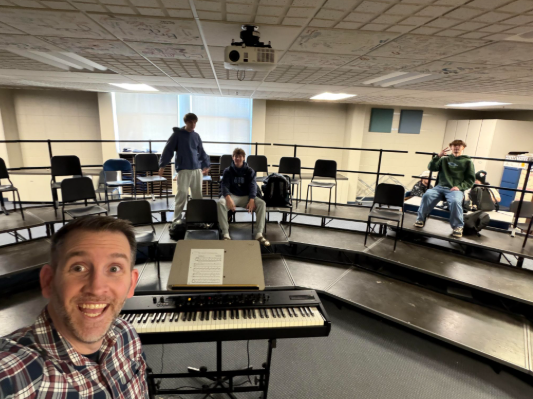
However, a couple of weeks ago, Kemp made the decision to officially resign. This followed a year when his position had initially been on the chopping block due to budget cuts, but was then saved after many students and parents spoke up. Triton decided to keep the position open for a new music teacher to take his place, but Kemp’s students were distraught when they heard the news that he would be leaving and couldn’t see a future in those classes without their beloved teacher.
When Junior Marcus Torres was asked about his plan for next year without Mr Kemp he said, “Mr Kemp has always been a fun teacher with a great personality and attitude towards students, allowing students to have fun and maintain a functional academic environment, next year most of my classes that I was going to take would have been with him, but due to the fact he is not going to a teacher at Triton anymore, I’m starting to reconsider taking these classes next year. I’ve seen the way other teachers teach and commence the learning for sound production and music, but they are not anything like Mr. Kemp, and unfortunately, in my last year of high school, I’m losing the connection and memories that I’ve made with him.”
Decisions like these may affect students, such as larger classes, fewer course options, and changes regarding who’ll be teaching them. This may also affect the way students learn and the school community as a whole.
When the question was asked about how teacher reductions affect class sizes and course offerings, Principal Patrick Kelley said they will remain on the smaller side.
“We have historically had very small class sizes and even with cuts, next year will still have most classes in the high teens and some in the low 20s,” said Kelley. “These levels would be considered good in most districts. While we have prioritized keeping class sizes small as a district, there is also a limit to what we can afford. The teacher reductions have not had as significant impact of course offerings yet. What has had a greater impact is that there are now fewer students, so there are not as many elective spots that can be filled.”